
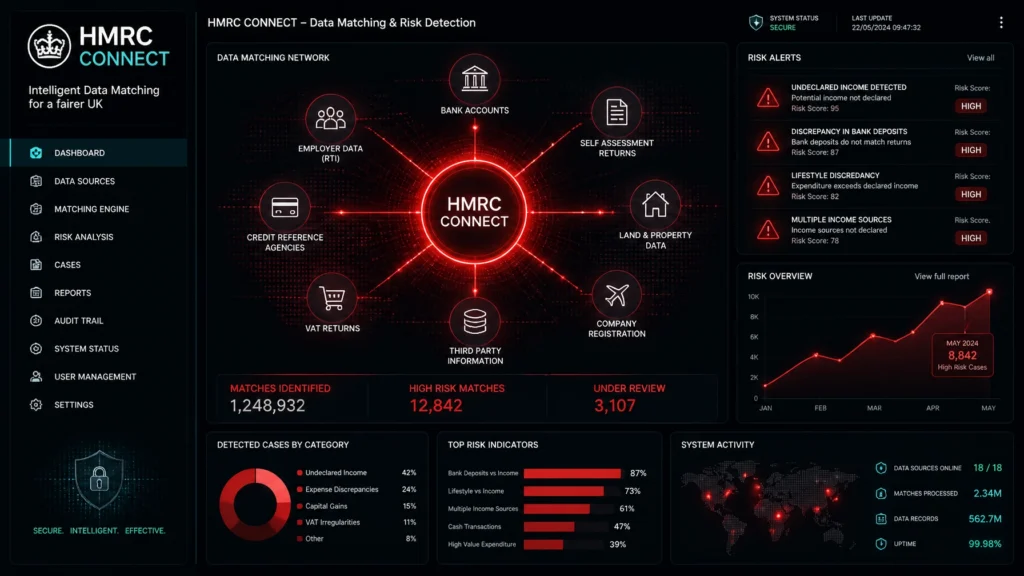
If you are a sole trader or a property landlord in the UK, your filing routine is changing. With Making Tax Digital (MTD) rolling out, quarterly updates are no longer just an optional administrative chore: they are live data feeds going straight into HMRC’s digital ecosystem.
And HMRC is watching. More specifically, their ultra-powerful data-matching machine: known as Connect: is constantly running behind the scenes, scanning every single submission for anomalies, discrepancies, and high-risk patterns.
If you think a hurried quarterly update or a rounded-up expense figure will slip past unnoticed, think again. HMRC’s systems don’t take holidays, and they don't overlook suspicious numbers.
Let's pull back the curtain on how HMRC’s Connect system evaluates your quarterly returns, what specific triggers turn heads at tax offices, and how you can keep your business safely off their radar.
Meet Connect: HMRC’s Silent, All-Seeing Digital Investigator
For years, tax investigations felt somewhat random or restricted to a tiny percentage of random audits. Those days are long gone.
HMRC’s Connect system is one of the most advanced data-matching tools in the world. It cross-references billions of data points every single day. It doesn't just read your tax return; it compares what you tell HMRC against dozens of external data sources in seconds.
Under MTD, instead of waiting quietly until the end of the year to check your numbers, HMRC receives structured digital updates every three months. This gives Connect a continuous, moving picture of your turnover, cash flow, and business patterns.
If your quarterly figures do not align with what third parties are reporting about you, or if they deviate sharply from industry norms, Connect flags your file for an automatic risk score increase. Too many red flags, and you could find yourself facing a formal tax enquiry.
The Top Red Flags That Catch HMRC’s Attention

So, what exactly sets off the alarm bells in HMRC’s automated risk-scoring machine? Whether you are running a trade as a sole trader or managing a rental property portfolio, here are the main triggers you need to watch out for:
1. Income Mismatches With Third-Party Data
Connect pulls data from high street banks, digital payment platforms (like PayPal, Stripe, eBay, and Airbnb), Land Registry records, and employers.
- For landlords: If Land Registry shows you own multiple properties, but your quarterly rental income declarations look suspiciously modest: or non-existent: Connect flags the discrepancy immediately.
- For sole traders: If your digital business bank accounts show heavy incoming deposits that significantly outpace the turnover reported in your quarterly updates, the mismatch triggers an automatic review.
2. Spikes and Unexplained Fluctuations in Expenses
HMRC maintains statistical benchmarks for hundreds of different trade categories. They know roughly how much a plumber, a freelance designer, or a residential landlord should expect to spend on overheads, materials, or repairs.
- If your quarterly expenses suddenly spike by 40% without any commercial explanation, or if your expense-to-income ratio looks wildly out of line with your industry peers, Connect takes notice.
- Claiming inflated vehicle, travel, or office costs when your turnover is flat or dropping is a classic ticket to an HMRC investigation.
3. Too Many Neat, Round Numbers
Are you typing in neat, perfectly rounded figures like £5,000 for travel, £2,000 for stationery, and £10,000 for subcontractor costs every single quarter?
HMRC’s risk models know that real-world business transactions are rarely exact multiples of a thousand. Consistently submitting estimated or guessed round numbers suggests poor record-keeping and immediately raises suspicion.
4. Persistent Low Profit Margins or Continuous Losses
Running a business at a loss or showing razor-thin profit margins year after year while maintaining a comfortable lifestyle is another major trigger. HMRC’s behavioral analysis looks at whether your declared income matches your apparent standard of living. If your quarterly updates show you earning very little, yet external indicators suggest otherwise, Connect will want to know how you are funding your lifestyle.
5. Inconsistencies Across Different Tax Obligations
If you are also VAT registered, your quarterly VAT returns and your MTD income tax updates must tell the exact same story. When turnover figures reported on VAT returns flatly contradict the numbers submitted in your income tax updates, HMRC’s systems flag the internal contradiction instantly.
Sole Traders and Landlords: Why Quarterly Returns Amplify the Risk
If you want a deeper dive into how these rules apply specifically to your day-to-day operations, take a look at our guides on MTD quarterly returns for sole traders and our breakdown of why your first MTD updates matter so much.
Under the old annual system, small errors or temporary anomalies could sometimes get buried in the noise by the time year-end rolled around. Quarterly reporting changes the game entirely:
- Real-time benchmarking: HMRC can compare your Q1 performance directly against your Q2 performance, spotting sudden dips or surges instantly.
- Faster escalation: Instead of waiting 18 months for an enquiry, discrepancies can now be flagged and queried while the tax year is still ongoing.
How to Stay Off Connect’s Radar

Keeping HMRC’s automated investigator away from your door doesn't require magic: it requires precision, discipline, and proactive bookkeeping. Here is how to keep your quarterly returns squeaky clean:
Keep Digital Records That Match Reality
Use reliable, approved accounting software that connects directly to your business bank feeds. Every penny of income and every allowable expense should be backed by a proper digital receipt or invoice. When your numbers match your bank statements down to the penny, there are no gaps for Connect to question.
Reconcile Everything Before You Submit
Never rush your quarterly updates at 11:50 PM on the day of the deadline. Take time to reconcile your business bank accounts, check platform sales reports, and ensure all income streams (including side hustles or property rents) are fully accounted for.
Document One-Off Anomalies
If your business experiences a genuine, massive fluctuation: such as losing a major client, buying expensive replacement equipment, or undertaking major property repairs: don't just submit the raw numbers and hope for the best. Keep clear notes, contractor invoices, and correspondence explaining why the numbers changed. If HMRC ever comes asking, you have your story straight from day one.
Don't Go It Alone
Navigating quarterly reporting obligations while trying to run your business or manage your property portfolio is stressful. Mistakes happen easily when you are rushed or confused by HMRC guidelines. Having an expert pair of eyes review your figures before they go live removes the guesswork entirely.
Protect Your Business With Makes Sense Accountants

At Makes Sense Accountants, we believe in plain English, zero jargon, and absolute peace of mind. We help sole traders, CIS sub-contractors, and property landlords manage their quarterly obligations effortlessly, ensuring your figures are robust, accurate, and completely transparent before they ever reach HMRC’s servers.
If you are worried about whether your quarterly returns are putting a target on your back, or if you simply want to hand the stress over to trusted professionals who speak your language, we are here to help.
Get in touch with our team today and let us keep HMRC’s automated systems away from your door.
Contact Makes Sense Accountants Today